THE TWELFTH INTERNATIONAL MEDICAL IMPROV TRAIN-THE-TRAINER WORKSHOP
There will not be a workshop in the US in Summer 2027.
There will likely be a workshop in Europe in Summer 2027.
It is possible this will occur in Bern, Switzerland July 24-28th.
To be notified if there will be a European workshop, and if yes when and where it will happen, please join the mailing lisT!
THE ELEVENTH INTERNATIONAL MEDICAL IMPROV TRAIN-THE-TRAINER WORKSHOP (SuMMER 2026)
Hosted by the Center for Bioethics & Medical Humanities of Northwestern University Feinberg School of Medicine in downtown Chicago
DATES
Saturday, July 11 - Wednesday, July 15, 2026
Registration
Registration opened on Thursday, February 26. The standard registration fee is $1,500 and a discounted rate of $500 is available for actors and full-time students who are not supported by their institution.
REGISTRATION AND THE WAITING LIST ARE NOW CLOSED.
Eligibility
This workshop trains people to teach medical improv. It is designed to serve people working in medicine with a variety of backgrounds and medical education or training roles. Examples include:
Physicians, nurses, and other medical professionals with limited or no improv experience who want to learn how to teach medical improv with a theater professional as a co-teacher.
Improvisers or theater professionals with limited or no medical background who want to learn how to teach medical improv with a medical professional as a co-teacher.
Standardized patients who want to learn a medical improv curriculum they could teach by themselves.
Physicians and other medical professionals who also have improv experience who want to learn a medical improv curriculum they could teach by themselves.
Other professionals working in medical environments with teaching responsibilities, such as those in ethics or the medical humanities.
Note: This workshop is not geared toward for-profit communication consultants. If you fall into this category and are interested in this work or training, email katie watson to discuss the options.
Cancellation Policy
If a registrant who has paid the workshop fee has an emergency that requires them to cancel on or before May 18, they will receive a full refund minus transaction fees. After May 18, the registrant will receive a refund minus transaction fees ONLY if their spot can be filled from the waitlist.
Dietary Accommodations
Vegetarian options will be available for all meals provided, but we regret that we cannot accommodate all dietary restrictions. Participants with other restrictions should plan to bring their own food.
Location
Northwestern’s Feinberg School of Medicine campus is located in the heart of Chicago near the city’s best museums, theaters, and shopping. The address of our main classroom building is 303 E Superior St, Chicago, IL 60611.
Flights
Chicago is served by two airports, O’Hare and Midway. The airports are on opposite sides of the city (north & south) but each is roughly the same distance from downtown. You can take public transportation downtown (the “el” (elevated) train) from either airport.
Hotels
The following hotels are within close walking distance of the workshop location. Please be sure to identify yourself as a guest of Northwestern University when booking, and you may receive discounted rates or other offers (like free wifi).

2019 Train-the-Trainer Workshop participants and instructors
Workshop Content
Improvisational theatre skills have a surprising and substantial overlap with the communication skills required of medical professionals. This insight led Workshop Director & Instructor Katie Watson to create an innovative “medical improv” course at Northwestern University’s Feinberg School of Medicine in 2002, which adapted improvisational theater principles and training techniques to build clinician communication skills with patients and colleagues, and to enhance cognition and teamwork in medicine.
Participants in the 2019 Train-the-Trainer workshop will spend five days in Chicago taking Watson’s 10-hour medical improv course. Improv class size will be small (12–14 students) to allow individual feedback. These groups will come together every day for didactic teaching in which all will learn how to teach Watson's course, and on the last day participants will practice teaching medical improv exercises themselves. Participants will also learn about other adaptations and applications of medical improv for residents and practicing clinicians. Participants will share their own expertise and goals in this area, and receive feedback and support for their future teaching plans. Participants will leave with an introduction to medical improv, a network of potential collaborators, and the skills and knowledge to begin creating a medical improv course that makes sense in the context of their own institutions, audiences, and roles.
(For more information on medical improv at Northwestern see Watson K. Serious Play: Teaching Medical Skills with Improvisational Theater Techniques. Acad Med. 2011;86:1260–1265. link)
Workshop structure
Experiential Workshop
Days 1-4: Workshop participants will take the 5-session (10 hour) “Playing Doctor” medical improv course Prof. Watson created for Northwestern-Feinberg medical students and has taught successfully for over ten years. Each session will be followed by a “how to teach this” debriefing and discussion, and a detailed exercise guide will be handed out.
Day 5: Participants will put their new knowledge into practice by teaching medical improv exercises. Your practice teaching will be supervised by the Instructors, and you will receive feedback from your students and the instructor.
Collaboration and Development
Expertise Exchanges: One or more sessions will feature short presentations by participants on how they’ve used improv in medical settings, and presentations by the instructors on how they’ve used medical improv in multiple contexts (eg residents/fellows, senior clinicians, interdisciplinary groups, ethics consultants).
Future Directions Discussions: There will be ample opportunity for participants to share their own contexts, and to brainstorm how they might modify existing medical improv ideas and practices to fit their own institutions, audiences, and goals.
“Field Research”
One evening will be spent seeing a Chicago improv show together.
Course DiRecTor

Katie Watson, JD is a Professor at Feinberg School of Medicine, Northwestern University, where she is an award-winning teacher of medical humanities, bioethics, and constitutional law. In 2002 Professor Watson integrated her expertise in medicine and improv to create a 10-hour improv course for Feinberg medical students, which she’s been teaching as a selective ever since. (She began studying and performing improv in 1997, and she was faculty at Chicago’s Second City Training Center 2008-15.) In 2011 Professor Watson originated the term “medical improv” in her Academic Medicine article about her work, and in 2013 she taught the nation’s first Medical Improv Train-the-Trainer Workshop. Her novel communications curriculum is now taught in medical schools and other health care training settings across the country, it was featured in the AAMC’s 2020 publication “The Fundamental Role of the Arts and Humanities in Medical Education,” and Professor Watson has presented keynote lectures, grand rounds, and workshops on medical improv for trainees and clinicians at medical schools, hospitals, and conferences across the country. | Contact: k-watson@northwestern.edu
2026 Instructors

Belinda Fu, MD is a family physician, educator, and performing artist based in Seattle. Belinda co-organized the 1st and 2nd Medical Improv Trainer Workshops with Prof. Watson in 2013-14, and since then has taught medical improv to clinicians, educators, students, residents, administrators, and staff of multiple disciplines, across the US and beyond. She is Clinical Associate Professor in the Department of Family Medicine, University of Washington School of Medicine, and Founder/Director of the Mayutica Institute, an education and training organization. Belinda is recognized for her outstanding public speaking, performance, teaching, and facilitation skills, and for her innovative approaches to medical education, physician wellness, communication, and improvisation. She received her BA at Stanford, her MD from the University of California at San Francisco, and completed her residency and fellowship at the University of Washington. She is an ensemble member of Seattle’s Unexpected Productions, and performs regularly with multiple improv groups in the Pacific Northwest. belindafu.com
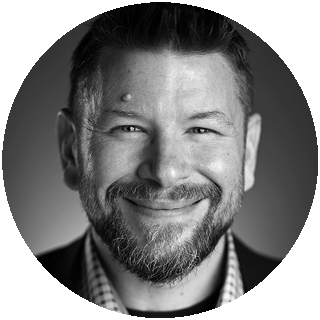
Joel Veenstra, MFA teaches improvisation, collaborative production, and stage management at the University of California, Irvine’s (UC Irvine) Claire Trevor School of the Arts, where he is Chair of the Department of Drama. In 2016, he was inspired by Watson’s Medical Improv curriculum and has brought it to UC Irvine’s School of Medicine for several years. In addition, he collaborated with Dr. Miriam Bender at UC Irvine’s Sue & Bill Gross School of Nursing to develop a Healthcare Improvisation Communication Workshop curriculum; their research was published and validated as effective in educating interprofessional healthcare students. He has shared this research at several institutions and at various national and international conferences, including with the Association of Medicine and Psychiatry. Veenstra served on the Applied Improvisation Network board, as a Medical Improv Collaborative advisor, and as co-founder of the Global Improvisation Initiative. He also applies and teaches improvisational concepts across business, theatre-making, and intergenerational and cultural bridge-building. As an improviser, he has performed throughout the country (and in Augmented Reality) with a variety of ensembles and organizations, including The Second City Hollywood, River City Improv, Improv Revolution, and with his family to make long-distance car rides with his kids mostly enjoyable.
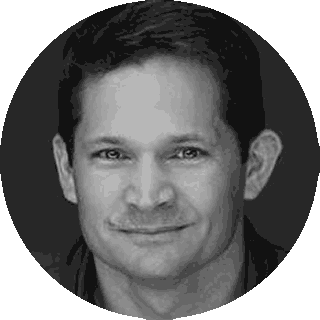
John-Michael Maury, BMEd is an actor, improviser, musician, and teaching artist weaving his knowledge of the performing arts into healthcare education. He manages the Standardized Patient Program at the UC San Diego School of Medicine, where he also facilitates a Medical Improv humanities elective for first and second-year medical students. Now in its 13th cohort, the course was recently awarded Exemplary status by UCSD’s Electives Committee. John-Michael teaches across multiple UCSD medical education programs also serving as an affiliate faculty artist with the UCSD Sanford Institute’s Center for Compassionate Communication. Trained in improvisation at Mission Improvable’s Westside Comedy Theatre in Santa Monica, JM has performed professionally, since 2012, with San Diego’s National Comedy Theatre where he also developed their Musical Improv program. He continues to present nationally and internationally on improv-based approaches to communication, feedback, and bias mitigation, and is an active member of the Medical Improv Collaborative (MIC). He will soon complete a Master of Arts in Social Innovation at the University of San Diego, with graduation expected in May 2026, and will continue teaching applied improv courses focused on social change, healthcare, and business education.

Lauren Dowden, MSW, LCSW is a clinical social worker at the Mesulam Center for Cognitive Neurology and Alzheimer’s Disease at the Northwestern University Feinberg School of Medicine, where she provides clinical care to individuals and families who are navigating a dementia diagnosis. Lauren supports the research, coordination and facilitation of ongoing quality of life programs and care partner support groups. Lauren developed the Mesulam Center’s storytelling workshop, Don’t Look Away: Using Storytelling to Give Voice, Find Connections, and Change Perceptions, which invited individuals with dementia and their care partner to co-create a story about their lived experience, which were featured on the Today Show, WTTW’s Chicago Tonight and in The New York Times. Lauren holds a Master of Social Work degree from Loyola University Chicago specializing in mental health with a gerontology sub-specialization and a BA in Theater Arts from Pennsylvania State University. She is an alumna of improv/sketch comedy theatres The Second City and Boom Chicago [Amsterdam] with 20+ years of experience performing and teaching improvisation and sketch comedy. Lauren is a Medical Improv instructor having taught medical students and healthcare professionals around the country, notably at Northwestern University, Northwestern Medicine, Indiana University-Purdue University Indianapolis, and UCLA. Lauren has also developed therapeutic improv curricula for populations navigating substance use disorders, trauma, anxiety, Parkinson’s disease, and major neurocognitive disorders.
+ ADDITIONAL 2026 INSTRUCTORS TBA!

2018 Train-the-Trainer Workshop participants and instructors
What Participants Say
The pace at which we made our way to sophisticated scene work, and then teaching is due to great organization and clear, supportive instruction. (2013)
I was so inspired by everyone in our group. Their care, creativity and huge hearts gave me great hope for healthcare and beyond. (2013)
Early June was an excellent time [to schedule this]. But quite honestly, I would come on Christmas day or my wedding anniversary for this workshop. (2013)
I thought the content and applications were extremely valuable both personally (as a way to enhance my own communication skills) and professionally as a way to move into the field of medical improv. (2014)
It was wonderful, exhausting (in a good way), challenging, thought provoking, and fun. (2014)
Shared input from attendees coupled with instructor presentation on a scale of 1-10 is a 1000. (2014)
I am leaving with an experience I will remember which has provided me with specific skills and which was more fun than my average vacation. … This was one of the top 3 professional development experiences of my career. (2015)
Great value considering effort/preparation/length of course and experience of the teachers. (2015)
Fantastic. I have never felt so much support in any class. Incredible instructors. (2015)
I got a broad range of tools that I can use in a variety of situations from direct patient care to teaching to team building. … An amazing experience – I grew in so many ways! (2015)
Surpassed my expectations in content, methodology, professionalism, practicality, inspiration, potential, and vision! (2015)

Tentative Schedule
Day One
12:00-1:00pm – Registration / Check-in
1:00-2:15pm – Welcome; Opening exercises; Orientation
2:30-4:45pm – Medical Improv Class 1: Fundamentals
5:00-6:00pm – Debrief on how to teach class 1
Evening Outing: Dinner and Improv Show (e.g., Second City) – provided
Day Two
8:15-9:00am – Breakfast provided in classroom
9:00-11:15am – Medical Improv Class 2: Character
11:30am-12:15pm – Debrief on how to teach class 2
12:15-1:45pm – Lunch (on your own)
1:45-4:00pm – Medical Improv Class 3: Spontaneity / Multitasking
4:15-5:00pm – Debrief on how to teach class 3
Evening Event: Happy Hour – drinks & snacks provided (6:00-7:30)
Day Three
8:30-9:15am – Breakfast provided in classroom
9:15am-10:00am – Expertise Exchange Part 1 (Participant discussion & demonstration of current educational work)
10:15-12:30pm – Medical Improv Class 4: Emotion; Uncertainty; Clarification
12:30-1:45pm – Lunch (on your own)
1:45-2:30pm – Debrief on how to teach class 4
2:45-4:15pm – Expertise Exchange Part 2
4:15-5:30pm – Applying Medical Improv In Context – Defining Your Goals & Overcoming Your Obstacles (discussion)
Day Four
8:30-9:15am – Breakfast provided in classroom
9:15-11:30am – Medical Improv Class 5: Status, Applications
11:45am-12:30pm – Debrief on how-to-teach class 5
12:30-1:45pm – Lunch (on your own)
1:45-3:00pm – Specialized Applications
3:00-4:30pm–Teaching preparation time (working with your teaching partners)
4:30-6:30pm – Class performance by participants for each other
Evening: free
Day Five
8:30-9:15am – Breakfast provided in classroom
9:15-9:30am– Practice Teaching Orientation/Launch
9:30-11:30am – Participant practice-teaching sessions
11:30-12:30pm – Lunch provided in classroom
12:30-2:30pm – Participant practice-teaching sessions
2:45-4:00pm – Wrap-up; evaluations
4:00pm – Adjourn
Questions? Please email Katie Watson